
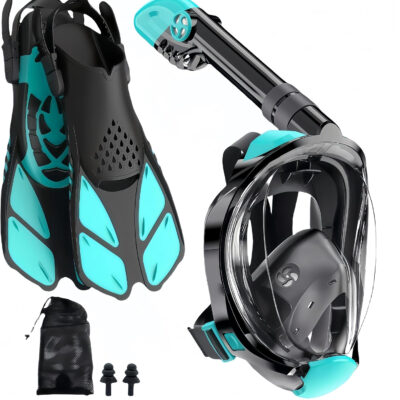

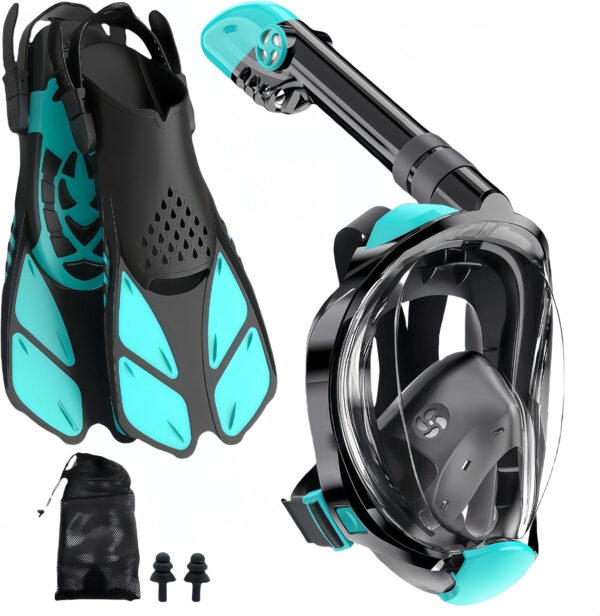
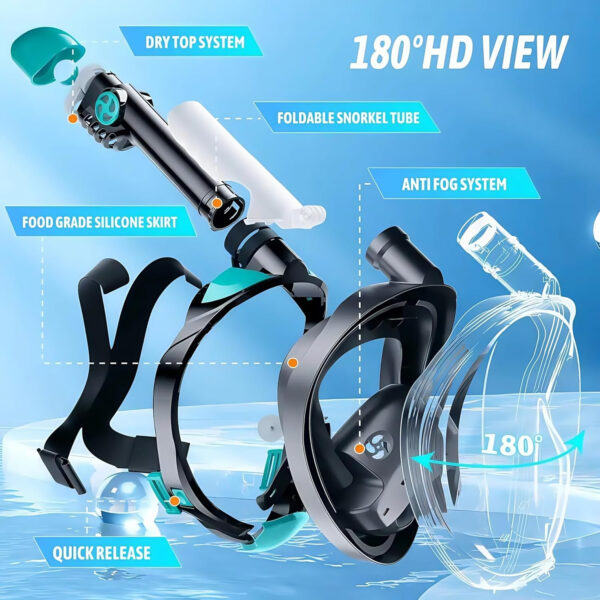
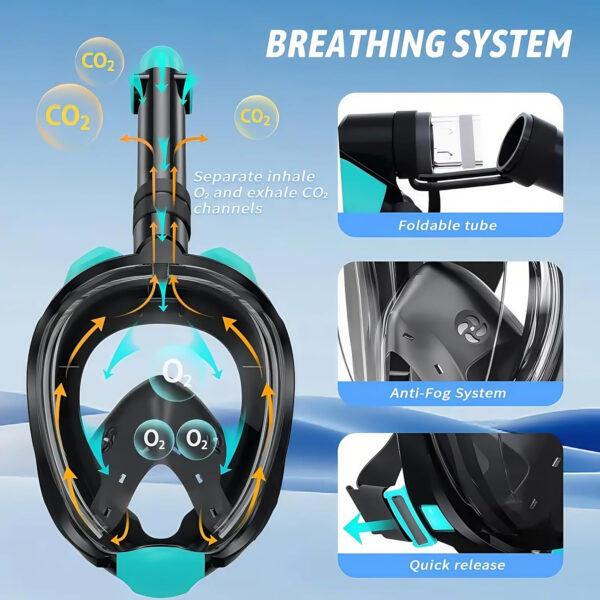
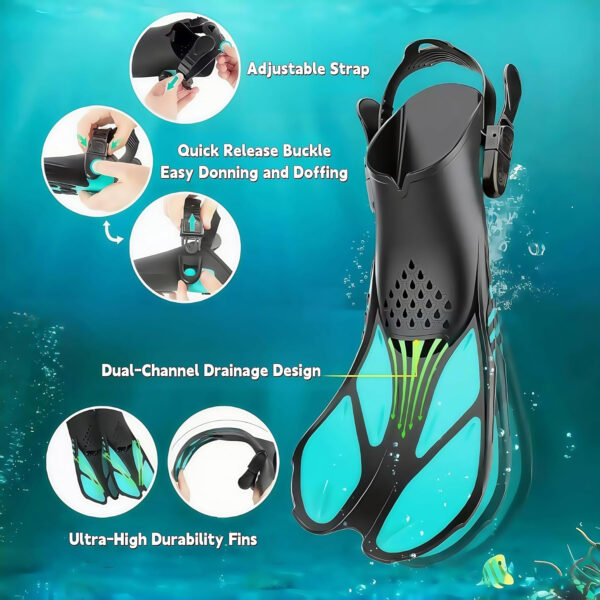
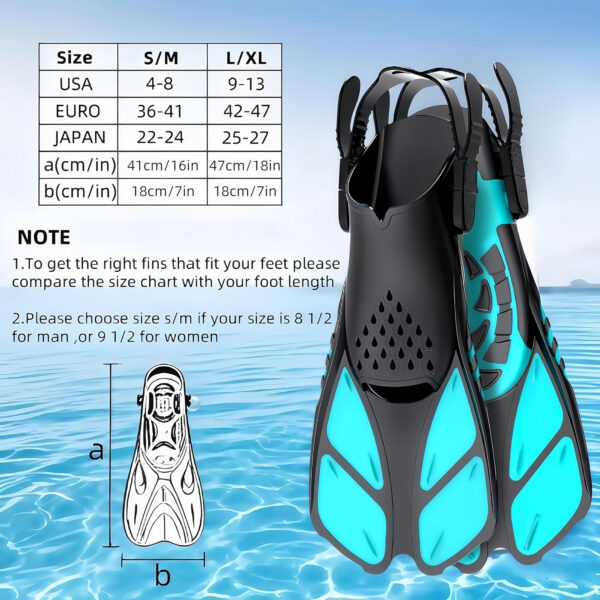
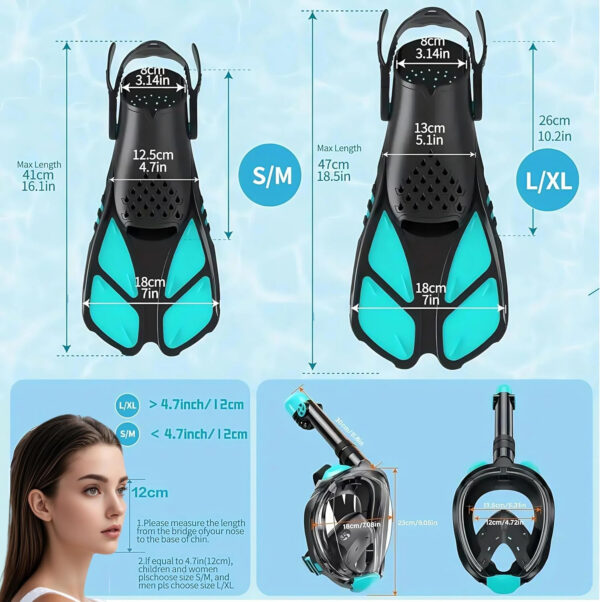


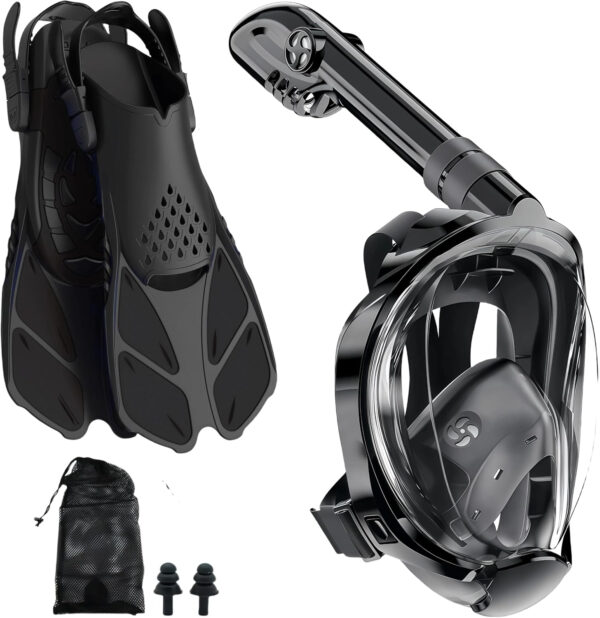
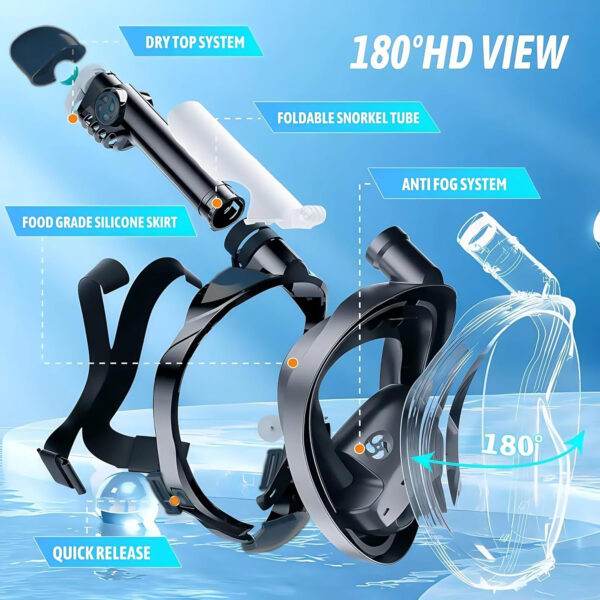
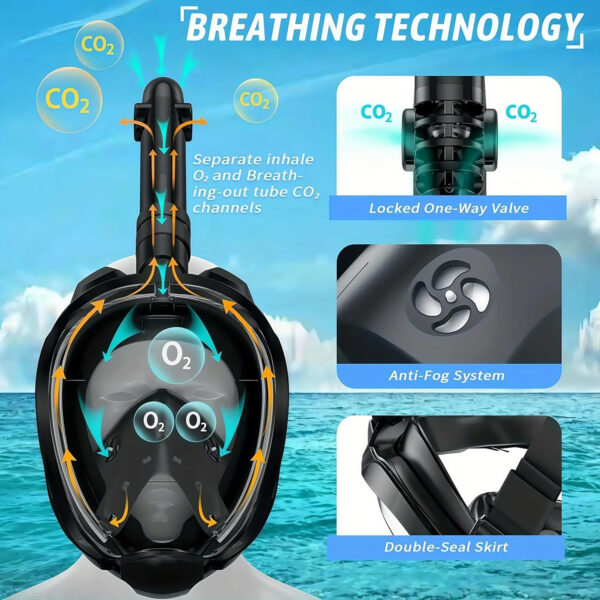

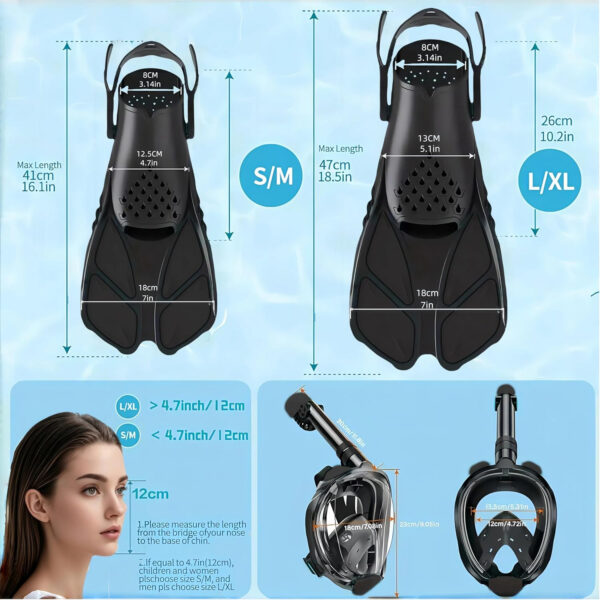

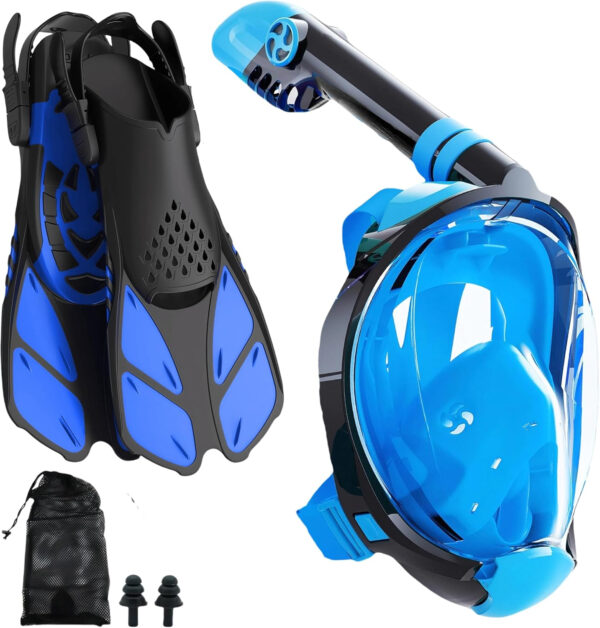
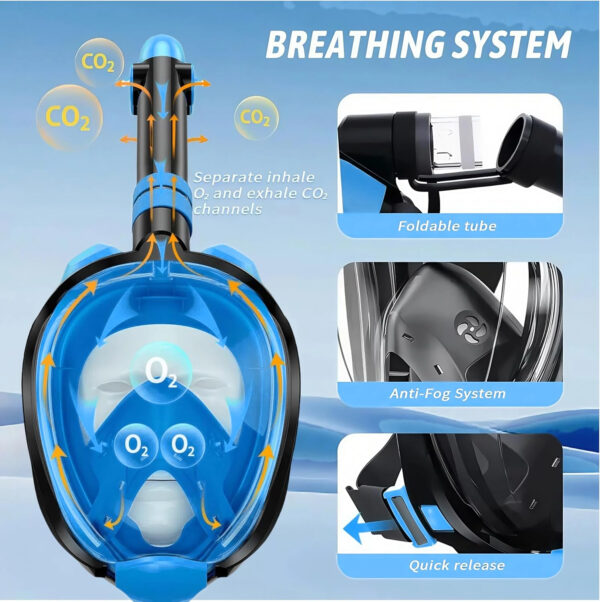
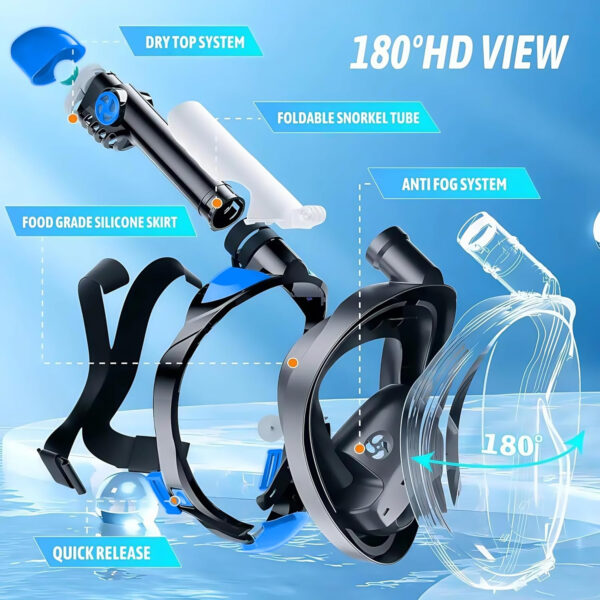

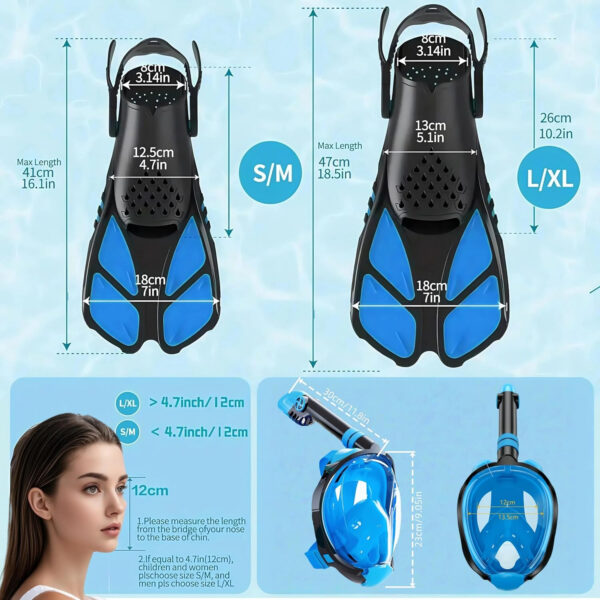
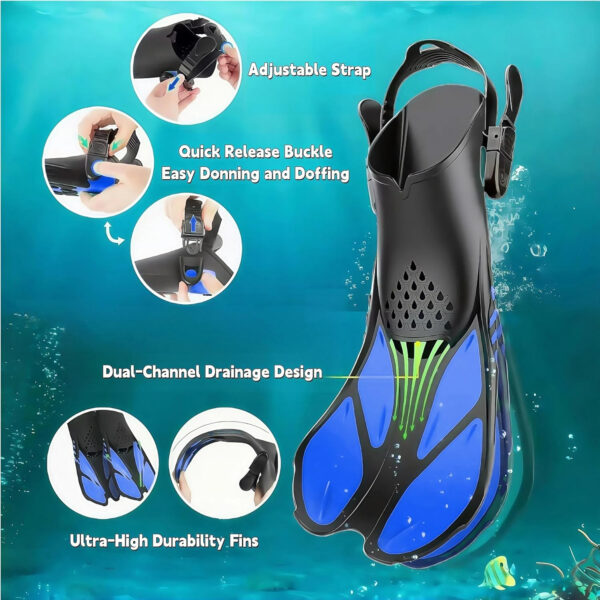





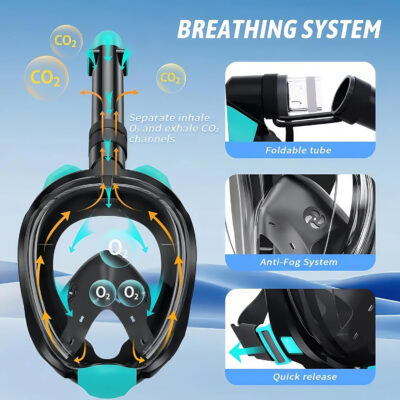
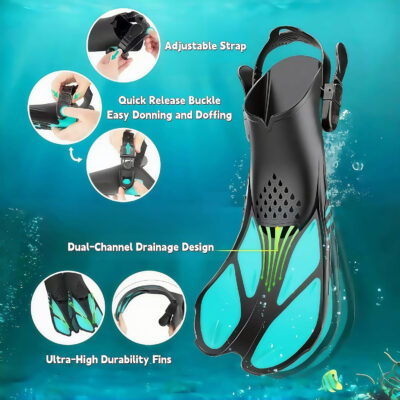
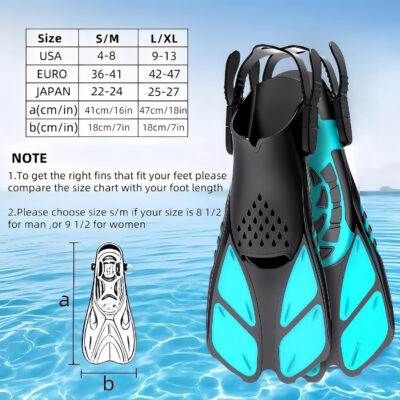
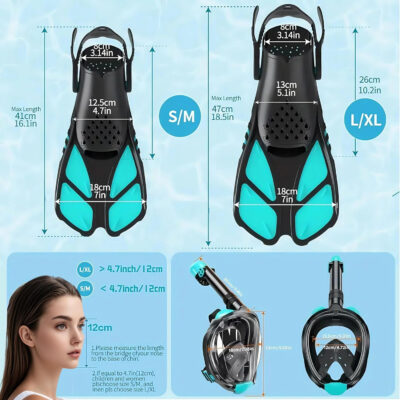


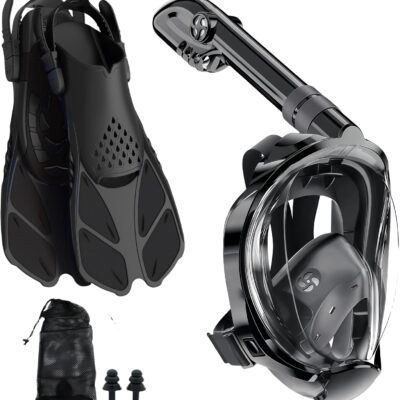
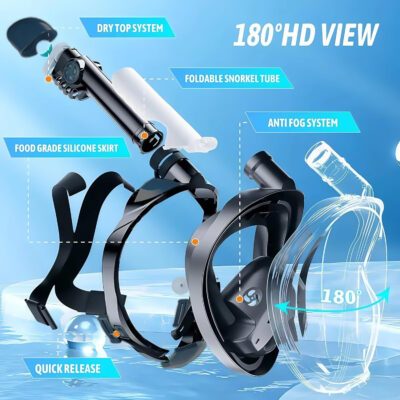
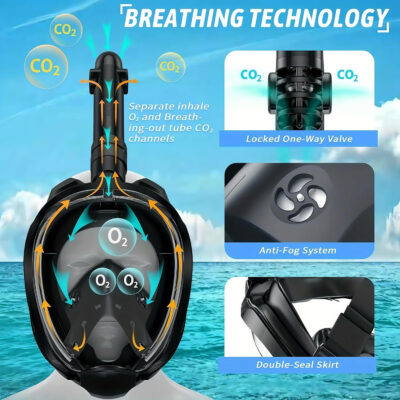

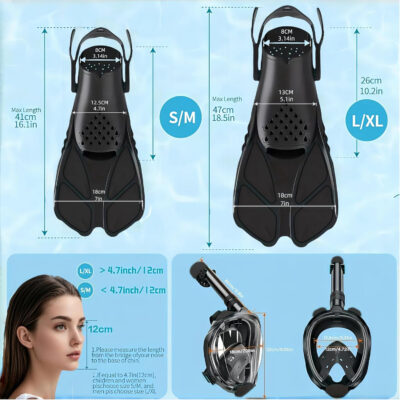

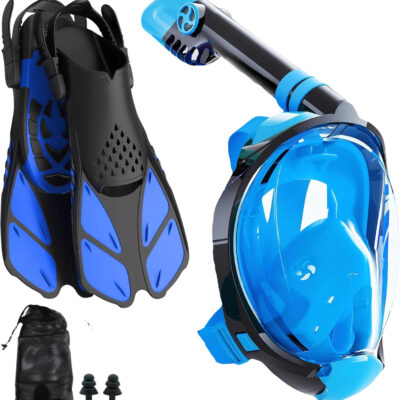

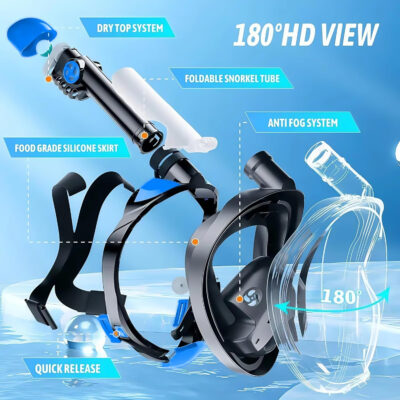

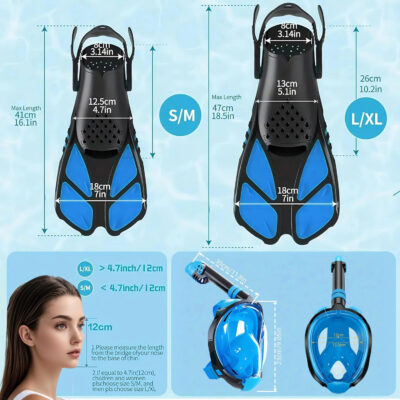
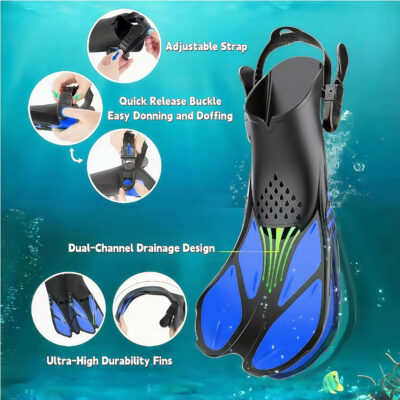

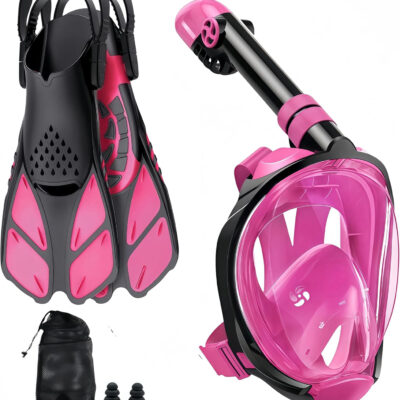
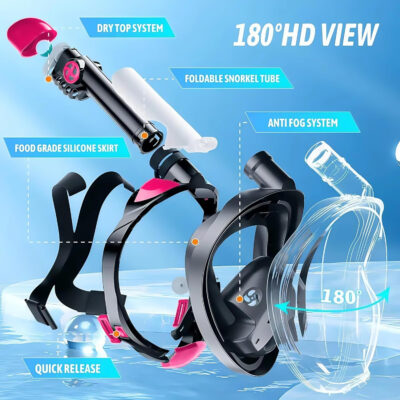

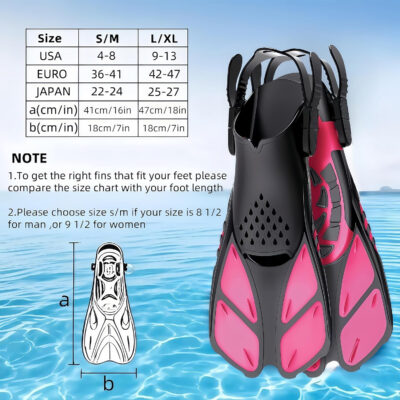

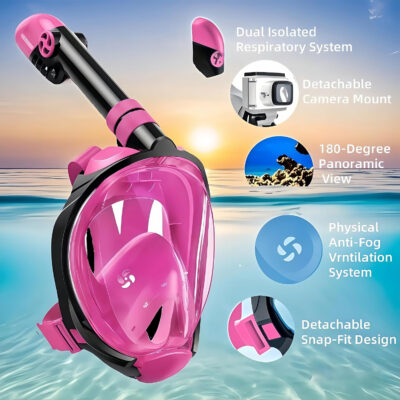
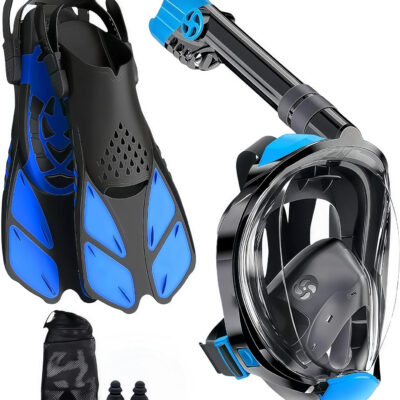

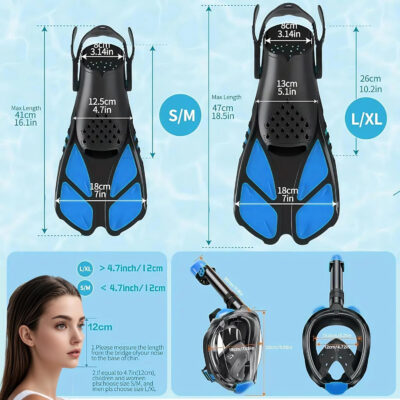
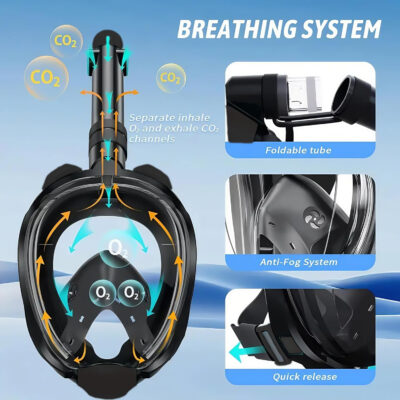

Product Description


Important: Read the user manual thoroughly before use to ensure proper understanding and safe operation.
How to Prevent Dizziness & Adapt to Your Snorkel MaskPre-Use Preparation
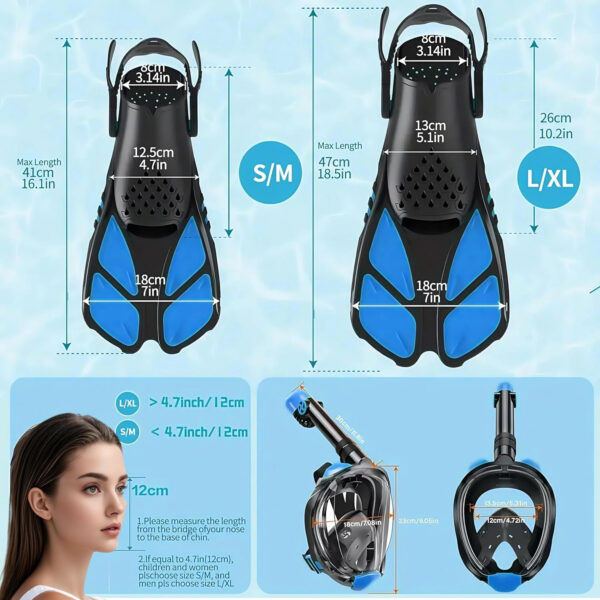
- For first-time users, seek professional training from a certified instructor. If professional guidance is unavailable: Carefully read the instruction manual. Test the mask fit: Ensure a snug, comfortable seal without over-tightening (to prevent facial pressure) or looseness (to avoid leaks). Practice in shallow water first. Gradually increase snorkeling duration as you adapt. Rest intervals: Beginners every 10 minutes; experienced users every 20 minutes to restore energy and lung capacity.
- Managing Discomfort or Dizziness WARNING: Lack of training or unfamiliarity with aquatic environments may trigger panic, rapid breathing, and rapid air depletion in the mask. Insufficient airflow can cause breathlessness or dizziness. If symptoms occur: Immediately loosen the side buckles while wearing a life jacket and remove the mask to breathe. Exit the water promptly if needed to recover.
- Safety Guidelines Always wear a life jacket and snorkel with a partner. Water conditions and personal fitness levels vary—prioritize safety.
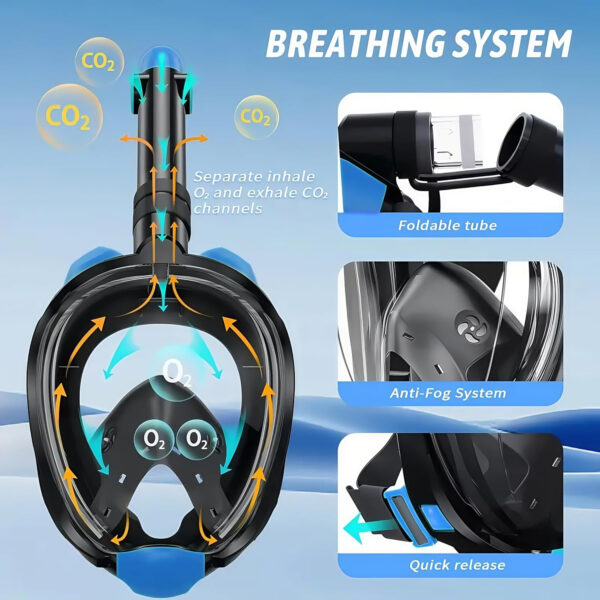
Preventing Lens Fogging Temperature differences between water layers may cause fogging. To minimize this:
- Apply anti-fog spray to the inner lens before use.
- Rinse the mask with a mild soap solution and air-dry (avoid wiping).
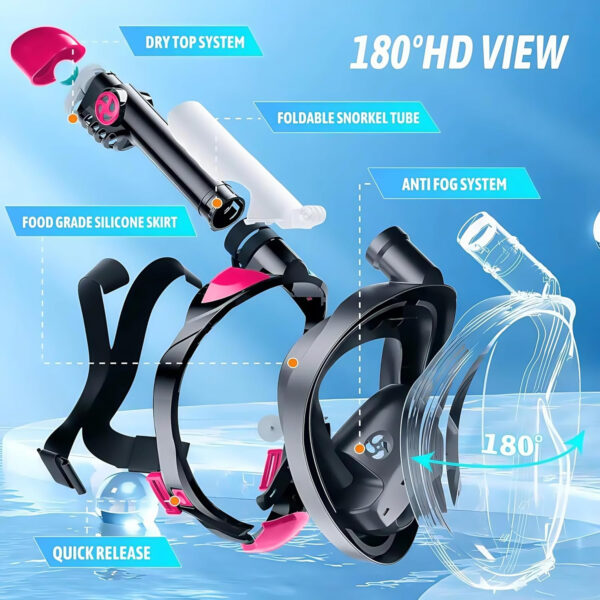
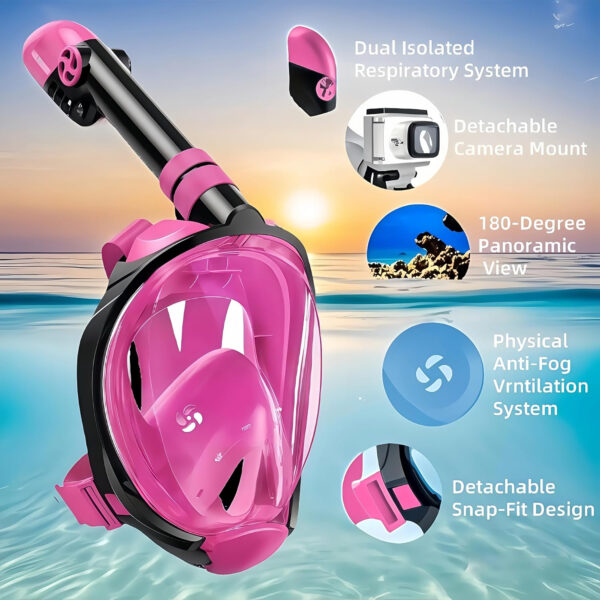
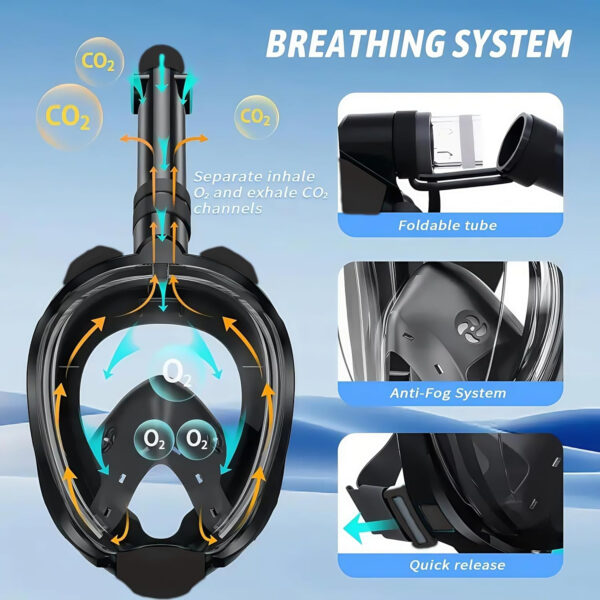
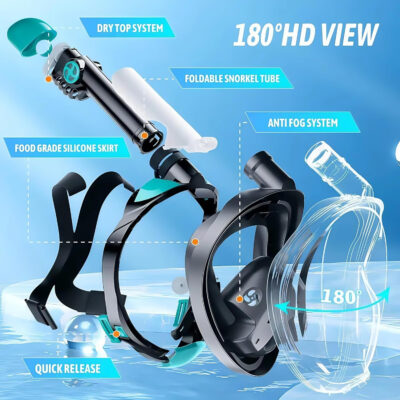
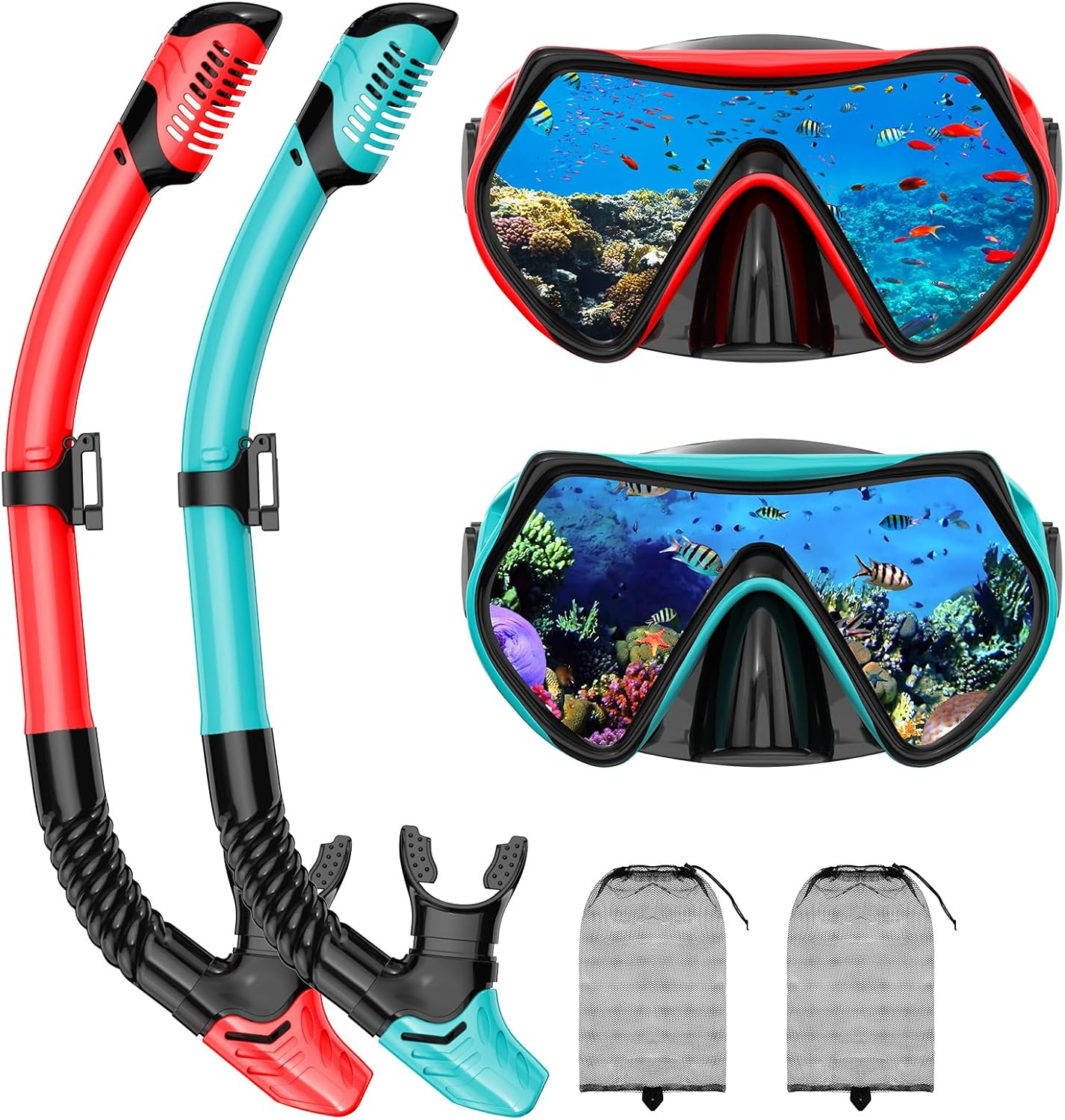
Float Valve System: Design, Functionality & Safety
1. How It Works
- Mechanism: When the snorkel tube is fully above water, the float valve drops by gravity, opening the air channel for continuous oxygen flow.
- Water Protection: If submerged, the float valve rises via buoyancy, sealing the tube instantly to block water ingress. This ensures safe, dry breathing in dynamic conditions.
2. Waterproof Design
- Surface Snorkeling Only: Designed for use at water level. During underwater diving, the float valve activates to prevent flooding.
- Critical Note: If water triggers the valve, airflow stops. Return to the surface immediately to avoid oxygen deprivation.
3. Wave & Head Movement Adaptation
- Automatic Adjustment: Waves or forward head tilts may submerge the snorkel tip. The float valve responds to water levels, sealing the tube to maintain dryness.
4. Reset Procedure
- After Diving: Exhale gently when resurfacing (do NOT inhale) to reset the float valve. Confirm the valve moves freely and the snorkel tip is fully above water before breathing.


Reviews
There are no reviews yet.